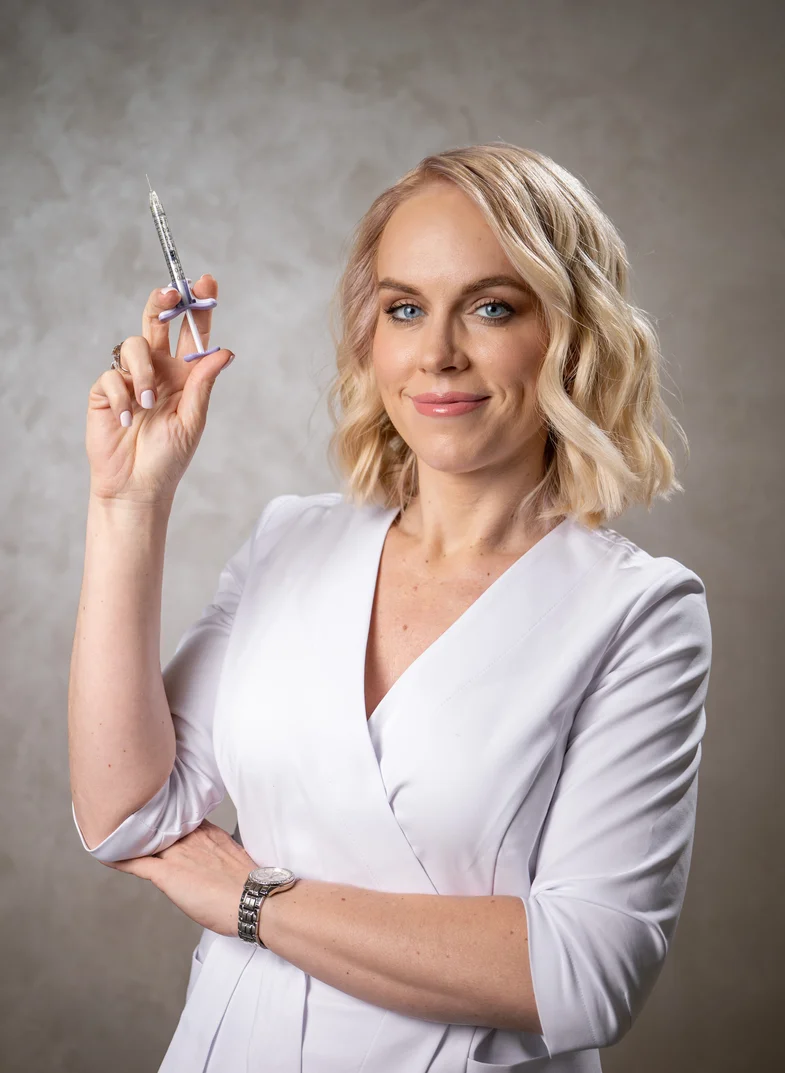
Zuzana Patka Gruntová, M.D.
Your treatment at DermaJas will be supervised by Dr. Zuzana Patka Gruntová, who has many years of experience in dermatology, laser medicine, and the administration of dermal fillers and botulinum toxin. At our clinic, we emphasize precision, safety, and a personalized approach.
Our great added value for you is the unique combination of traditional dermatology and aesthetic medicine, which allows our doctor to approach each client comprehensively and professionally. We do not view aesthetic treatments in isolation but always within the context of overall skin health, which significantly enhances the safety of procedures and the quality of results.
Dr. Zuzana Patka Gruntová has over 12 years of experience not only in Slovakia but also abroad. Her professional skills and attention to detail guarantee visible results and your satisfaction. Her professional approach includes continuous education and actively following the latest trends and scientific findings in dermatology and aesthetic medicine. Her goal is not to alter facial features, but to sensitively enhance natural beauty and boost each client’s self-confidence.
Experience a treatment in a pleasant environment using the latest technologies and procedures at the DermaJas clinic in Trenčín.